
70 years of controversy: Iniesta’s apology continues to question Golden Ball justice. Harry Kane’s triumph at the 2026 Golden Ball ceremony on Monday evening in London did not end the usual debate about this award.
Rather, he turned to the center a sensitive question: does the voting system really determine the best football system, or is the result influenced by criteria that can be interpreted differently, team trophies, personal impressions and media attention?
England’s captain and Bayern Munichu’s assailant triumphed in front of Kylian Mbppes and Lamine Yamali. Kane scored 73 goals for the Bavarez club and for the English representative during the 2025/26 season, helped Bayern win the local trophy tripleta and achieved 14 goals in the Champions League.
These figures constitute a strong argument in his favor. However, they do not conclude the debate over how statistics translate into votes and weight given to each criterion when compared to football players with different positions, roles and circumstances.
Spain’s representative paves the way for controversy
After the ceremony, Jose Felix Diaz, director of the AS newspaper and Spain’s sole representative in the voting jury, discovered that Kane, Mbppe and Yamal were in the first three places on his list, but in a different order from the final one.
Speaking on El Goruero Radio Cadena SER, he said: I expected the winner to be Mbpe or Lamine Yamal, because Harry Kane lacks something.
Díaz also disclosed that nine of the ten footballers he had selected ended up in the first ten of the final ranking. However, he did not find out the full ranking of his vote, nor had he placed Mbhape or Yamal in the first position.
A journalist’s opinion does not testify that Kane’s triumph was undeserved. But it points out one of the main problems: voters don’t always agree on what it means to be the best, and this cannot be determined only through a statistical formula.
If the price depended solely on numbers, the ranking could be built on goals, assistances and offensive contributions. If only trophies were valued, then their number would solve the debate.
In reality, rules combine crucial individual presentations, collective successes and sports behavior. However, it is difficult to explain exactly how each journalist interprets these criteria when deciding his vote.

2010: Messing and Iniesta Research
One of the most controversial episodes in the history of Golden Ball dates back to 2010, when Lionel Messi won the prize in a year when Spain was proclaimed world champion in South Africa.
Andrés Iniesta, author of the decisive goal in the final against the Netherlands, finished in second place, while Xavi Hernández placed third.
The messiahs certainly did not lack the arguments to win the prize. He was one of the biggest world football stars. However, the result returned questions about the justice of the voting system and how individual excellence should be weighed in the face of a collective historical success.
The debate did not remain only at the level of public discussion. In April 2018, Pascal Ferree, then editor – in – law of France Football magazine, published a text dedicated to Iniesta, in which he apologized for never having won the Golden Ball.
Sorry, Andrés, wrote Ferree, describing Iniesta’s absence on the list of winners as one of the most painful injustices. He referred to what he called a democratic effect and hoped that Inista could correct this with an extraordinary presentation at the World Cup in Russia.
In 2010, Inista finished second after Mess, and in 2012 she came in third, after Mess and Cristiano Ronaldo. This happened despite his winning the European Championship with Spain and having been declared the best tournament player.
If France Football itself had accepted a democratic effect in the case of Iniesta, then it is reasonable to ask whether later changes of the system have been sufficient to prevent similar controversy.

The lack of Mess on the podium promotes new debate
Kane’s case shows how complicated this is. The English striker achieved an extraordinary number of goals and led Bayern towards a brilliant season in local competitions. Meanwhile, Mbpe and Yamal had their own arguments based on individual splendor and the impact they had on Real Madrid, Barcelona and representatives of France and Spain.
Then it’s Messy. The winner of the Golden Ball after the World Cup triumph in Qatar was ranked fifth this time, despite leading Argentina towards another world final and having significant performances with Inter Miami.
This shows that debate is related not only to sports criteria but also to media influence, how confessions are built about football players, and how attention can focus on one name at the expense of another.
The irony is this: Both Mess and Ronaldo have benefited in the past from this media attention. In other cases, their presentations have been questioned compared to those of rivals.
None of these circumstances prove that the Messi ranking this year was unfair. However, they ask a fundamental question: Is the competition determined only by what a footballer does in the field, or does it influence his ability to become part of the story that media choose to promote?
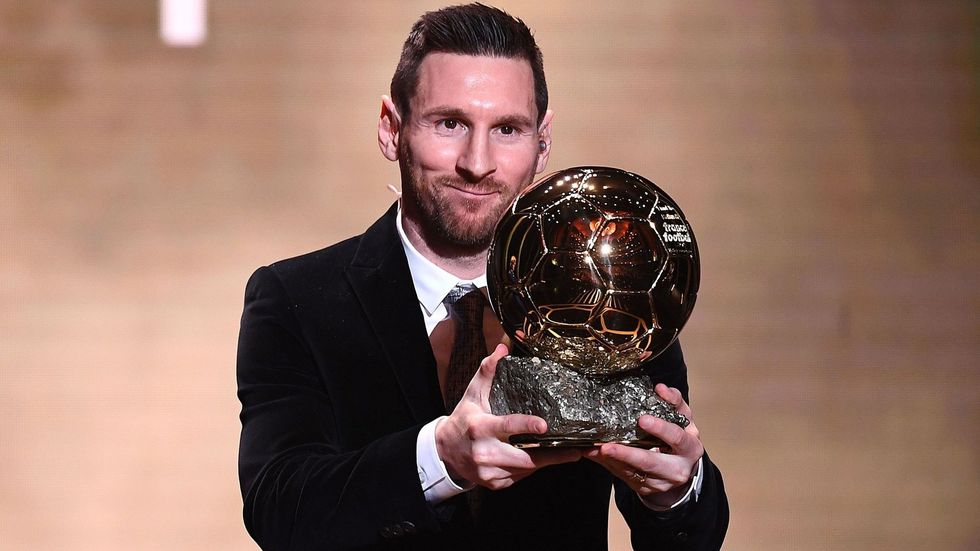
The controversy will not end: Who determines the best?
Reforming the Golden Ball does not mean changing rules whenever a debate arises about the winners. No voting system can guarantee full reconciliation in a collective sport.
What is required is more clarity in implementing the criteria, a serious discussion on the margins of voting by journalists, the manner of selecting candidates and balancing between individual excellence and collective success.
The problem is not that Kane or Messie won the prize. The problem is that each result brings back a question that successive reforms have failed to finally resolve: what makes a football player the best in the world? Who has the authority to determine this, and on what basis?
Today’s jury includes journalists from different countries, with different football cultures and different interpretations of the criteria. As long as these differences exist, the Golden Ball will remain not only a prestigious prize, but one of the world’s largest football debates. /Telegraphy/